
Coaches
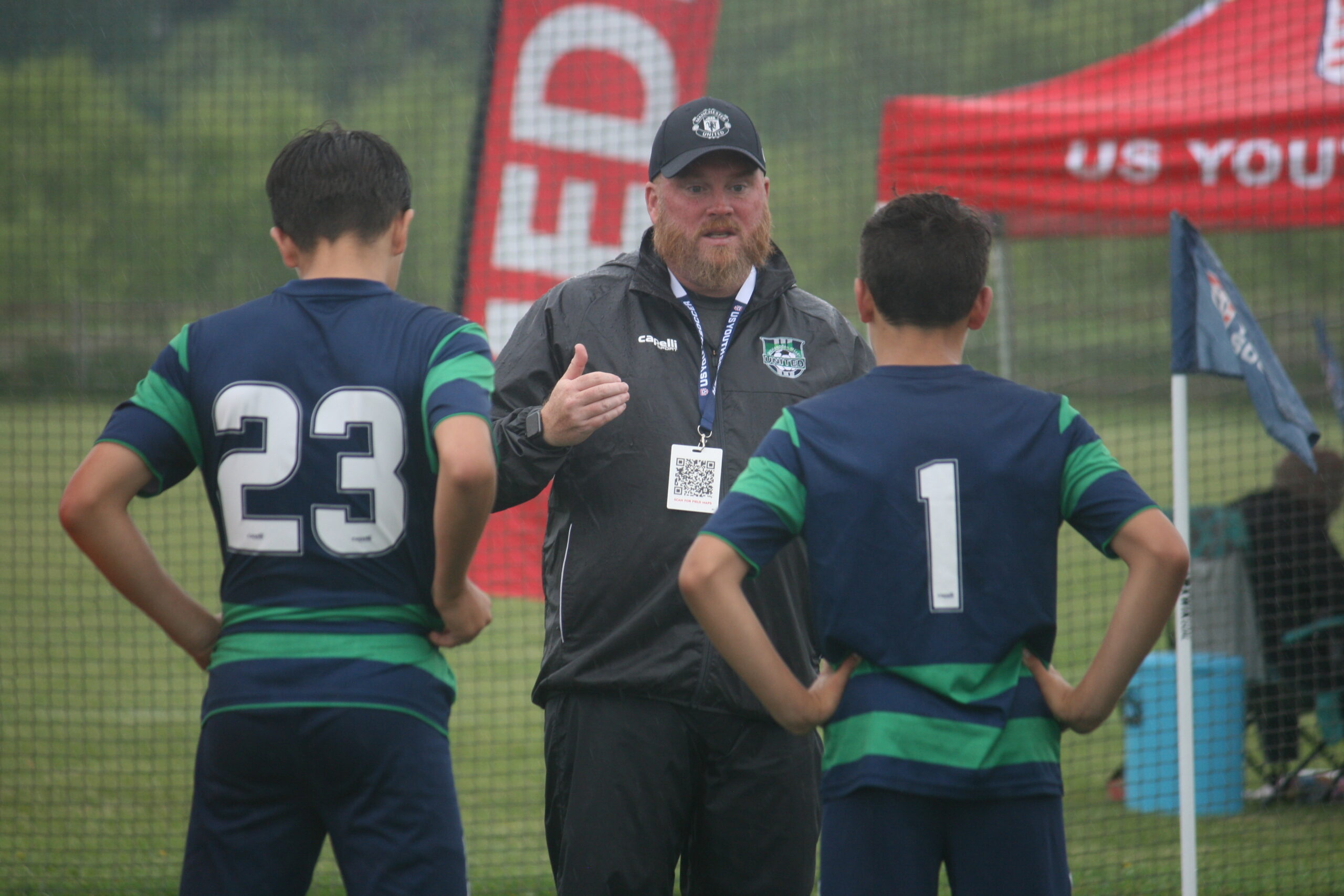
Interested in coaching with SVU? We are always looking for dedicated soccer coaches committed to a common goal! Please reach out to the SVU Technical Director – Jason Moore for more information! Jason.Moore@ShenValleySoccer.com
Complete and submit our COACH INTEREST FORM
Coaches must be able to create a player-centered, developmentally appropriate learning environment. A learning plan must first take the players’ developmental needs as a starting point in order to help them become confident learners
Player-Centered Approach to Coaching
A player-centered approach is essential for effective soccer coaching.
- Coaches should adjust learning environments and processes to meet players’ needs.
- Understanding players’ social, emotional, and cognitive characteristics is vital.
- Coaches must strive to know who the players are and what they require.
SOCIAL DEVELOPMENT, EMOTIONAL DEVELOPMENT, LANGUAGE DEVELOPMENT, COGNITIVE DEVELOPMENT, PHYSICAL DEVELOPMENT
-
Coaching Resources
-
U6 Hotshots Curriculum and age group specifics
U5: DISCOVERY PHASE I: MOVEMENT EXPLORATION AND BALL DISCOVERY
- Players discover (explore/experiment) fundamental movement skills (ME AND MY MOVEMENT SKILLS)
- Players discover (explore/experiment) how to manipulate a ball with both hands and feet (ME AND MY BALL)
- Players are introduced to parallel and associative play (ME AND MY FRIENDS)
U6: DISCOVERY PHASE II: DRIBBLING AND SHOOTING
- Players develop fundamental movement skills (ME AND MY MOVEMENT SKILLS)
- Players develop eye-hand and eye-foot coordination (ME AND MY BALL)
- Players are introduced to fundamental soccer skills with the ball (ME AND MY BALL)
- Players are introduced to cooperative play without structured team play (ME AND MY TEAMMATE)
-
U8 Curriculum & Sessions and age group specifics
To access all Coaching Resources from our old website page: please click HERE
PHASES OF DEVELOPMENT: FOUNDATION
U7-U8: FOUNDATION PHASE I: SCANNING, RECEIVING, DRIBBLING, SHORT PASSING AND SHOOTING
- Players develop scanning skills (ME AND MY SCANNING SKILLS)
- Players develop fundamental movement skills (ME AND MY MOVEMENT SKILLS)
- Players develop fundamental soccer skills with and without the ball (ME AND THE BALL)
- Players are introduced to cooperative, low structured team play (ME AND MY TEAMMATES)
Learning Environment and Coaching Strategies
Creating an effective learning environment is crucial for player development. - Focus on fun and spontaneous play to encourage skill development.
- Use age-appropriate activities that promote movement and ball skills.
- Coaches should be enthusiastic, patient, and provide positive feedback.
- Encourage creativity and decision-making in players during practice.
-
U10 Curriculum & Sessions and age group specifics
To access all Coaching Resources from our old website page: please click HERE
U9-U10: FOUNDATION PHASE II: SCANNING, RECEIVING, DRIBBLING, SHORT COMBINATION PLAY AND FINISHING
- Players develop scanning skills (ME AND MY SCANNING SKILLS)
- Players develop fundamental movement skills (ME AND MY MOVEMENT SKILLS)
- Players continue to develop fundamental soccer skills with and without the ball with pressure (ME AND THE BALL)
- Players develop cooperative play, low structured team play based on a style of play (ME AND MY TEAMMATES)
Goals for Foundation Phase I
The focus is on developing fundamental skills in movement and soccer while fostering teamwork and self-esteem.
- Players develop scanning skills, fundamental movement skills, and soccer skills with and without the ball.
- Introduce cooperative, low-structured team play.
- Emphasize respect for game rules and fair play.
- Activities are centered around deliberate play and spontaneous experiences.
- Utilize small-sided games to challenge players and promote skill development.
Learning Environment Objectives
The learning environment aims to enhance physical and cognitive skills while promoting teamwork and self-reflection.
- Develop individual coordinated movements and reaction speed.
- Foster spatial awareness and teamwork through reduced coordinated movements.
- Encourage players to reflect on their performance to build self-esteem.
- Introduce team tactical principles and the ability to win the ball back.
Coaching Strategies for Young Players
Coaching should be enthusiastic and supportive, focusing on individual challenges and fostering a positive environment.
- Be adaptable and flexible in coaching methods.
- Use short instructions and language appropriate for children.
- Provide positive feedback and specific praise to build confidence.
- Encourage creativity and decision-making while allowing for mistakes.
- Maintain a focus on fun and enjoyment in the game.
-
U12-U15 Curriculum & Sessions and age group specifics
Coaching Strategies for Young Players
Coaching should be enthusiastic and supportive, focusing on individual challenges and fostering a positive environment.
- Be adaptable and flexible in coaching methods.
- Use short instructions and language appropriate for children.
- Provide positive feedback and specific praise to build confidence.
- Encourage creativity and decision-making while allowing for mistakes.
- Maintain a focus on fun and enjoyment in the game.
Social and Emotional Development in Children
Children’s social interactions and emotional awareness evolve significantly during middle childhood.
- Increased self-awareness and sensitivity to peer opinions.
- Begin to understand the impact of their actions on others.
- Develop a sense of fairness and justice, often taking it personally when things seem unfair.
- Experience fluctuating emotions and may struggle with self-regulation.
Cognitive Development in Middle Childhood
Cognitive abilities expand, allowing children to think logically and understand complex concepts.
- Begin to categorize knowledge and understand cause and effect.
- Can connect present experiences to past and future events.
- Develop the ability to focus for longer periods and engage in problem-solving.
- Language skills become more complex, allowing for better expression of thoughts and feelings.
Physical Development in Middle Childhood
Children experience steady physical growth and improved motor skills during this stage.
- Average growth rate of 5 cm (2 inches) per year.
- Continued development of fine and gross motor skills.
- Increased ability to optimize movement and coordination.
- Enhanced sensory response and endurance development.
U11-U12: FOUNDATION PHASE III: SCANNING & POSITIONING, RECEIVING, DRIBBLING, SHORT COMBINATION PLAY AND FINISHING
- Players develop scanning skills (ME AND MY SCANNING SKILLS)
- Players develop fundamental movement skills (ME AND MY MOVEMENT SKILLS)
- Players continue to develop fundamental soccer skills with and without the ball under a moderate level of pressure (ME AND THE BALL)
- Players develop cooperative play, moderate structured team play based on a style of play (ME AND MY TEAMMATES)
U13-U14: PROGRESSION PHASE I: SCANNING & POSITIONING, RECEIVING, DRIBBLING, QUICK COMBINATION PLAY AND FINISHING
- Players develop scanning skills (ME AND MY SCANNING SKILLS)
- Players develop fundamental movement skills (ME AND MY MOVEMENT SKILLS)
- Players continue to develop fundamental soccer skills with and without the ball under a high level of pressure (ME AND THE BALL)
- Players develop high structured team play based on a style of play (ME AND MY TEAMMATES)
-
Know who is in front of you! A holistic approach to coaching
Individual Differences in Development
Each child’s development is unique and influenced by various factors.
- Biological factors include gender and genetics.
- Psychological factors encompass stress levels and motivation.
- Cultural, educational, and social factors also play a significant role.
Player-Centered Approach to Coaching
A player-centered approach is essential for effective soccer coaching.- Coaches should adjust learning environments and processes to meet players’ needs.
- Understanding players’ social, emotional, and cognitive characteristics is vital.
- Coaches must strive to know who the players are and what they require.
Developmental Stages and Characteristics
The framework outlines specific characteristics for each age group in soccer.- U5: Self-centered, developing friendships, short attention span.
- U6: Less egocentric, beginning to share, increased emotional control.
- U7: More independent, developing loyalty to groups, fragile self-esteem.
- U8: Social world expands, increased self-awareness, beginning to understand fairness.
- U9: Stronger desire to belong, developing identity, sensitive to peer opinions.
- U10: Assertiveness grows, emotional maturity begins, peer influence increases.
- U11: Transitioning social environments, developing individual relationships.
- U12: Navigating complex social settings, emotional stability improves.
- U13: Identity formation, peer group dependency, conflict with authority.
- U14: Stronger self-assertion, emotional control improves, romantic interests emerge.
- U15: Navigating independence, emotional maturity develops, peer pressure awareness.
- U16: Complex social navigation, emotional intelligence improves, planning skills develop.
- U17: Increased independence, identity exploration, risk-taking behaviors.
- U18: Emerging adulthood, complex decision-making, self-reflection increases.
- Coaching Resources
- U6 Hotshots Curriculum and age group specifics
- U8 Curriculum & Sessions and age group specifics
- U10 Curriculum & Sessions and age group specifics
- U12-U15 Curriculum & Sessions and age group specifics
- Know who is in front of you! A holistic approach to coaching
Coaching Resources
Podcasts:
Youth Soccer Coaching Player Development Pod
The Learning Leaders show with Ryan Hawk
U6 Hotshots Curriculum and age group specifics
U5: DISCOVERY PHASE I: MOVEMENT EXPLORATION AND BALL DISCOVERY
- Players discover (explore/experiment) fundamental movement skills (ME AND MY MOVEMENT SKILLS)
- Players discover (explore/experiment) how to manipulate a ball with both hands and feet (ME AND MY BALL)
- Players are introduced to parallel and associative play (ME AND MY FRIENDS)
U6: DISCOVERY PHASE II: DRIBBLING AND SHOOTING
- Players develop fundamental movement skills (ME AND MY MOVEMENT SKILLS)
- Players develop eye-hand and eye-foot coordination (ME AND MY BALL)
- Players are introduced to fundamental soccer skills with the ball (ME AND MY BALL)
- Players are introduced to cooperative play without structured team play (ME AND MY TEAMMATE)
U8 Curriculum & Sessions and age group specifics
To access all Coaching Resources from our old website page: please click HERE
PHASES OF DEVELOPMENT: FOUNDATION
U7-U8: FOUNDATION PHASE I: SCANNING, RECEIVING, DRIBBLING, SHORT PASSING AND SHOOTING
- Players develop scanning skills (ME AND MY SCANNING SKILLS)
- Players develop fundamental movement skills (ME AND MY MOVEMENT SKILLS)
- Players develop fundamental soccer skills with and without the ball (ME AND THE BALL)
- Players are introduced to cooperative, low structured team play (ME AND MY TEAMMATES)
Learning Environment and Coaching Strategies
Creating an effective learning environment is crucial for player development.
- Focus on fun and spontaneous play to encourage skill development.
- Use age-appropriate activities that promote movement and ball skills.
- Coaches should be enthusiastic, patient, and provide positive feedback.
- Encourage creativity and decision-making in players during practice.
U10 Curriculum & Sessions and age group specifics
To access all Coaching Resources from our old website page: please click HERE
U9-U10: FOUNDATION PHASE II: SCANNING, RECEIVING, DRIBBLING, SHORT COMBINATION PLAY AND FINISHING
- Players develop scanning skills (ME AND MY SCANNING SKILLS)
- Players develop fundamental movement skills (ME AND MY MOVEMENT SKILLS)
- Players continue to develop fundamental soccer skills with and without the ball with pressure (ME AND THE BALL)
- Players develop cooperative play, low structured team play based on a style of play (ME AND MY TEAMMATES)
Goals for Foundation Phase I
The focus is on developing fundamental skills in movement and soccer while fostering teamwork and self-esteem.
- Players develop scanning skills, fundamental movement skills, and soccer skills with and without the ball.
- Introduce cooperative, low-structured team play.
- Emphasize respect for game rules and fair play.
- Activities are centered around deliberate play and spontaneous experiences.
- Utilize small-sided games to challenge players and promote skill development.
Learning Environment Objectives
The learning environment aims to enhance physical and cognitive skills while promoting teamwork and self-reflection.
- Develop individual coordinated movements and reaction speed.
- Foster spatial awareness and teamwork through reduced coordinated movements.
- Encourage players to reflect on their performance to build self-esteem.
- Introduce team tactical principles and the ability to win the ball back.
Coaching Strategies for Young Players
Coaching should be enthusiastic and supportive, focusing on individual challenges and fostering a positive environment.
- Be adaptable and flexible in coaching methods.
- Use short instructions and language appropriate for children.
- Provide positive feedback and specific praise to build confidence.
- Encourage creativity and decision-making while allowing for mistakes.
- Maintain a focus on fun and enjoyment in the game.
U12-U15 Curriculum & Sessions and age group specifics
Coaching Strategies for Young Players
Coaching should be enthusiastic and supportive, focusing on individual challenges and fostering a positive environment.
- Be adaptable and flexible in coaching methods.
- Use short instructions and language appropriate for children.
- Provide positive feedback and specific praise to build confidence.
- Encourage creativity and decision-making while allowing for mistakes.
- Maintain a focus on fun and enjoyment in the game.
Social and Emotional Development in Children
Children’s social interactions and emotional awareness evolve significantly during middle childhood.
- Increased self-awareness and sensitivity to peer opinions.
- Begin to understand the impact of their actions on others.
- Develop a sense of fairness and justice, often taking it personally when things seem unfair.
- Experience fluctuating emotions and may struggle with self-regulation.
Cognitive Development in Middle Childhood
Cognitive abilities expand, allowing children to think logically and understand complex concepts.
- Begin to categorize knowledge and understand cause and effect.
- Can connect present experiences to past and future events.
- Develop the ability to focus for longer periods and engage in problem-solving.
- Language skills become more complex, allowing for better expression of thoughts and feelings.
Physical Development in Middle Childhood
Children experience steady physical growth and improved motor skills during this stage.
- Average growth rate of 5 cm (2 inches) per year.
- Continued development of fine and gross motor skills.
- Increased ability to optimize movement and coordination.
- Enhanced sensory response and endurance development.
U11-U12: FOUNDATION PHASE III: SCANNING & POSITIONING, RECEIVING, DRIBBLING, SHORT COMBINATION PLAY AND FINISHING
- Players develop scanning skills (ME AND MY SCANNING SKILLS)
- Players develop fundamental movement skills (ME AND MY MOVEMENT SKILLS)
- Players continue to develop fundamental soccer skills with and without the ball under a moderate level of pressure (ME AND THE BALL)
- Players develop cooperative play, moderate structured team play based on a style of play (ME AND MY TEAMMATES)
U13-U14: PROGRESSION PHASE I: SCANNING & POSITIONING, RECEIVING, DRIBBLING, QUICK COMBINATION PLAY AND FINISHING
- Players develop scanning skills (ME AND MY SCANNING SKILLS)
- Players develop fundamental movement skills (ME AND MY MOVEMENT SKILLS)
- Players continue to develop fundamental soccer skills with and without the ball under a high level of pressure (ME AND THE BALL)
- Players develop high structured team play based on a style of play (ME AND MY TEAMMATES)
Know who is in front of you! A holistic approach to coaching
Individual Differences in Development
Each child’s development is unique and influenced by various factors.
- Biological factors include gender and genetics.
- Psychological factors encompass stress levels and motivation.
- Cultural, educational, and social factors also play a significant role.
Player-Centered Approach to Coaching
A player-centered approach is essential for effective soccer coaching.
- Coaches should adjust learning environments and processes to meet players’ needs.
- Understanding players’ social, emotional, and cognitive characteristics is vital.
- Coaches must strive to know who the players are and what they require.
Developmental Stages and Characteristics
The framework outlines specific characteristics for each age group in soccer.
- U5: Self-centered, developing friendships, short attention span.
- U6: Less egocentric, beginning to share, increased emotional control.
- U7: More independent, developing loyalty to groups, fragile self-esteem.
- U8: Social world expands, increased self-awareness, beginning to understand fairness.
- U9: Stronger desire to belong, developing identity, sensitive to peer opinions.
- U10: Assertiveness grows, emotional maturity begins, peer influence increases.
- U11: Transitioning social environments, developing individual relationships.
- U12: Navigating complex social settings, emotional stability improves.
- U13: Identity formation, peer group dependency, conflict with authority.
- U14: Stronger self-assertion, emotional control improves, romantic interests emerge.
- U15: Navigating independence, emotional maturity develops, peer pressure awareness.
- U16: Complex social navigation, emotional intelligence improves, planning skills develop.
- U17: Increased independence, identity exploration, risk-taking behaviors.
- U18: Emerging adulthood, complex decision-making, self-reflection increases.